You ever notice how the people preaching gratitude the loudest sometimes sound like they’ve retired from having big goals?
“I’m just so grateful for my horse and my life.”
Which is great. But what if part of you is wondering whether being grateful means becoming satisfied with less?
If you practice gratitude, are you lowering your standards? Losing your edge? Settling for “at least I didn’t die” instead of “that was a run I’m proud of”?
I hear versions of this from ambitious riders all the time. They want to appreciate where they are, but they’re afraid that getting too comfortable will take away the hunger that got them this far.
But gratitude doesn’t have to make you soft. Used well, it can actually make you a steadier, more effective competitor.
The problem isn’t gratitude. It’s what you think gratitude requires you to give up.
Does gratitude mean you’re settling?
I once had a conversation with a rider who wasn’t satisfied with her results. She was riding, showing up, and making progress, but it never felt like enough.
People kept telling her to appreciate how far she’d come. Her response was something I think a lot of competitive riders can relate to:
If I become grateful for where I am, am I going to stop pushing for where I want to go?
That’s the tension.
You want the bigger score. The cleaner run. The faster time. The better maneuver. You don’t want gratitude to become an excuse for staying exactly where you are.
But when I asked what constantly riding from dissatisfaction felt like, the answer was pretty clear: tense, tight, braced, and constantly chasing something.
And her horse felt it too.
When she allowed herself to appreciate what was already working, something changed. She could breathe. Her body softened. She could think more clearly.
Gratitude wasn’t taking away her ambition. It was changing the state she pursued it from.
Ambition without gratitude can become a hamster wheel
There’s nothing wrong with wanting more from yourself as a rider. I’m a huge believer in having big goals and working your butt off for them.
But ambition gets dangerous when nothing is ever enough.
- You win, but immediately think about the mistake you made.
- Your horse gives you the best stop you’ve had in months, but you’re already analyzing what could have been better.
- You improve your score, but instead of enjoying the progress, you compare it to somebody who scored higher.
- You reach one goal and immediately move the finish line.
That isn’t necessarily high performance. Sometimes it’s just dissatisfaction wearing a cowboy hat.
If your motivation always comes from I’m not good enough yet, every achievement only gives you temporary relief before your brain finds the next reason you’re behind.
That is exhausting.
Gratitude doesn’t lower the bar. It gives you a healthier place to stand while you reach for it.
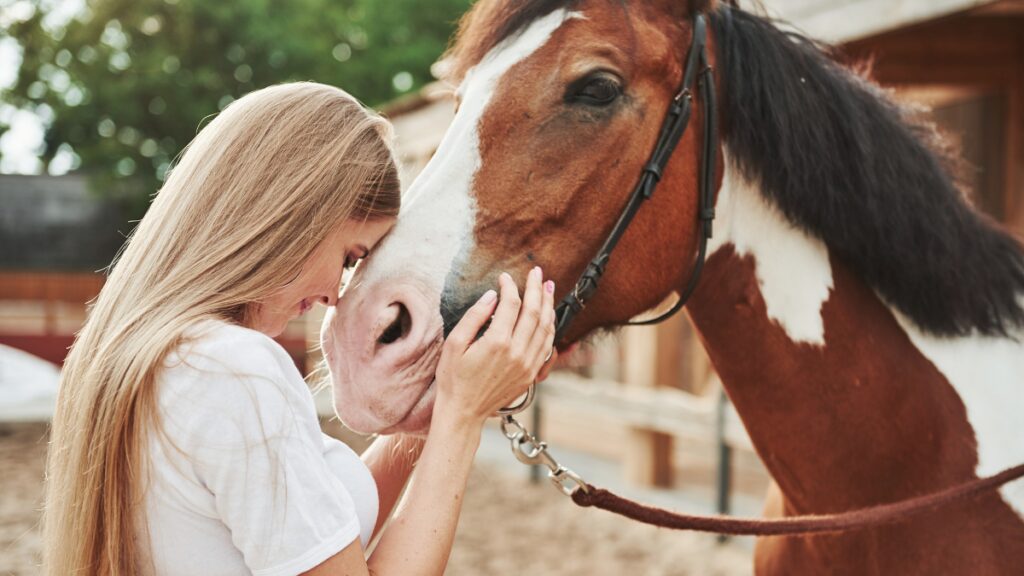
Gratitude without ambition isn’t the goal either
Now let’s swing too far in the other direction.
Gratitude shouldn’t become:
Well, I’m just happy to be here.
…when you know darn well you want to win.
You don’t have to pretend you don’t care about the buckle, the check, the score, or finally nailing the maneuver you’ve been working on.
- You can love your horse deeply and still expect more from your training.
- You can appreciate today’s ride and still identify what needs work tomorrow.
- You can celebrate how far you’ve come without deciding you’ve gone far enough.
Acceptance and complacency are not the same thing.
Gratitude acknowledges what is good right now. Ambition decides where you want to go next.
You need room for both.
Gratitude and ambition can work together
I like to think of gratitude as the anchor and ambition as the fire.
Gratitude keeps you connected to what’s happening right now: the progress you’ve made, the horse underneath you, the opportunity to ride, and the things that are already working.
Ambition keeps you moving. It challenges you to improve, take risks, enter the show, refine your skills, and see what else you and your horse are capable of.
When those two work together, you don’t have to choose between being grateful and being competitive.
You can say:
- I’m proud of how I handled that run, AND I know what I want to improve.
- I’m grateful for this horse, AND we have bigger goals.
- We’ve come a long way, AND we’re not finished.
That AND matters.
Use gratitude as fuel, Not a cop-out
The difference comes down to what you do with gratitude.
If you use “I should just be grateful” to avoid looking at something that needs improvement, gratitude becomes an escape hatch.
But if gratitude helps you regulate yourself enough to look clearly at what happened, recognize progress, learn from mistakes, and get back to work?
Now it’s useful.
After a ride, instead of choosing between That sucked and Everything was wonderful, give yourself room for a more accurate assessment.
Ask yourself:
- What am I genuinely grateful for from this ride?
- What improved?
- What did my horse do well?
- Where did I handle something better than I used to?
- What still needs work?
- What do I want to carry into the next ride?
Now gratitude isn’t asking you to ignore the gap.
It’s helping you see the whole picture instead of only staring at what’s missing.
You don’t need dissatisfaction to stay hungry
This may be the biggest mindset shift of all.
You do not have to hate where you are to become better.
You don’t have to constantly criticize yourself to stay motivated. You don’t need to leave every ride focused on what went wrong so you don’t become “too comfortable.”
You can want more because you’re excited about what’s possible—not because you’re disgusted with where you are now.
That creates a very different experience in the saddle.
So if gratitude has always felt a little too soft for your competitive brain, try looking at it differently.
Be grateful. Stay hungry.
Appreciate what you’ve built while continuing to build.
Celebrate the ride that went well and then get back to work.
Love where you are without pretending it’s where you want to stay forever.
That’s not settling.
That’s learning how to pursue your goals without making yourself miserable on the way there.
You can be grateful AND still want more
If you have big riding goals but the pressure you put on yourself sometimes makes it harder to actually perform, 5 Days to Confident Competitor is a great place to start.
This isn’t about lowering your standards or convincing yourself to be happy with “good enough.” It’s about developing mental skills that help you stay steadier when the stakes rise, trust yourself under pressure, and keep your brain working with you instead of against you.
You can be grateful for where you are and hungry for where you’re going.
[START 5 DAYS TO CONFIDENT COMPETITOR]
Happy Trails!
Nicole Burnett
Mental Coach & Founder, Resilient Reiner
Read Next
If pressure, overthinking, or show nerves have been getting in the way of your best rides, 5 Days to Confident Competitor is a simple place to start.
This five-day training helps you understand what happens in your brain and body when the pressure rises, so you can begin building tools to steady yourself, communicate more clearly with your horse, and ride with more confidence.
Start Building Show-Pen Confidence
I'm ready to stop show nerves →
Your horse feels what you bring into the saddle.
When pressure hits, your body, timing, focus, and confidence all affect the ride your horse gets.
Nicole Burnett is a mental performance coach for western riders who want their mindset to match their skill, their horse, and their goals.
Through practical mindset coaching and nervous system training, Nicole helps riders stay steady, communicate more clearly, and ride more effectively — whether they’re rebuilding confidence at home, sharpening their show-pen mindset, or preparing to compete on the national stage.
Work With Nicole
Explore ways to work with Nicole →
