A rider messaged me recently and said:
“Nicole, I love your stuff… but I barely have time to ride as it is. In fact, I’m so busy I just put my horse into full-time training! Do I really have time to add mental training on top of everything else?”
If you’ve ever thought some version of that, you’re in very good company. The doubt usually isn’t Am I committed enough? It’s If I add one more thing, what breaks?
And when you’re already balancing work, family, horses, shows, bills, and everything else life throws at you, that’s a legitimate question.
When your whole life feels like a sprint
The rider who messaged me is a busy non-pro with a job, a family, and one nice horse. By the time she gets to the barn, she’s already lived three lives that day.
Show weeks add even more. Work still needs her. Family still needs her. Her horse needs to be prepared. Now there are patterns to memorize, a warm-up plan to think about, and all the other moving pieces of showing horses.
She told me, “Honestly, some days I’m impressed I made it to the arena with my boots on the right feet.”
Same, girl. Same.
I understand this on a very personal level. I’ve had seasons where adding one more thing—even a good thing—felt like stacking another brick on top of a Jenga tower that was already swaying.
So I’m not going to argue with your calendar. The problem is that most riders have the wrong idea about how much time mental training actually requires.
Mental training doesn’t need to become another huge routine
When riders hear mental training, they often picture journaling for 30 minutes, followed by meditation, affirmations, visualization, breathwork, and apparently quitting their job so they have time to finish all of it.
As a type-A, Virgo, eldest daughter, I can absolutely fall into the trap of thinking the day is ruined because I didn’t complete the “perfect” four-hour grounding routine before 8 a.m. I am my own first client. 😆
But effective mental training doesn’t require massive, perfect sessions.
Small, consistent reps matter.
Instead of finding another hour in your schedule, look at the moments you already have: driving to the barn, standing in the barn aisle, getting ready to mount, cooling out, or walking back after your run.
That’s also how I approach mental training inside the Mental Gym for Equestrians. The goal is to make the work fit into an actual rider’s life rather than create another giant routine you feel guilty about not completing.
Your life doesn’t have to shrink to make room for your mental game. Your mental game can move into the life you already have.
And when that happens, the rides you do have time for can become a lot more intentional.

5-Minute mental training for busy riders
You don’t need to start doing everything below. In fact, please don’t.
Choose one place in your existing routine where a small mental habit fits naturally. Let that become something you just do, then build from there.
1. Before you mount: take 60 seconds and give yourself a job
Before your foot goes in the stirrup, take three slow breaths and decide on one clear job for the ride.
Maybe it’s Today my job is to ride my corners and breathe. Or Today my job is to keep my eyes up and sit deep.
Instead of climbing on with 37 different things bouncing around your brain, you’ve given yourself one place to direct your attention.
Time: 60 seconds.
2. In the truck: Ask one better question
On your way to the barn or show, ask yourself:
What would the rider I’m becoming focus on today?
Maybe she focuses on her transitions instead of replaying last week’s mistake. Maybe she pays attention to her breathing instead of comparing herself to everyone in the warm-up pen.
You’re shifting your attention away from I’m behind and toward What can I do today?
Time: 30 seconds—or however long you want to think about it.
3. After your ride: Find 3 wins + 1 focus
Before you move on with your day, identify three things that went well and one thing you want to focus on next time.
Your wins don’t need to be huge. Maybe you stayed with your horse when he spooked, remembered to breathe through your circles, or had one really good stop.
Then choose one useful focus for your next ride.
This helps train your brain to recognize progress instead of automatically scanning the entire ride for everything you did wrong.
Time: About 90 seconds.
4. While cooling out: Rehearse where you’re going
While you’re cooling out or hand-walking, picture yourself at a show a few months from now. See yourself approaching the arena with relaxed shoulders, an unclenched jaw, and steady breathing.
Then picture yourself riding—not perfectly, but present, prepared, and able to make decisions.
You’re giving your brain a rehearsal for the way you want to show up.
Time: 2 minutes.
5. During chores: Practice an identity statement
Choose a statement that reflects the rider you’re becoming and repeat it while you’re already doing something else.
I’m the kind of rider who keeps my head clear under pressure.
I’m the kind of rider who shows up for my horse even on busy days.
I’m the kind of rider who rides the pattern in my mind before I ride it in the pen.
This isn’t about hyping yourself up with something you don’t believe. It’s about intentionally reinforcing the identity you’re practicing.
Extra time required: zero.
Same life. Different mental game.
This is what I want busy riders to understand: you don’t necessarily need more hours.
You can still have the same job, family, horse, responsibilities, and 24 hours everybody else gets. But instead of arriving at the barn already mentally scattered, you can have a way to reset. Instead of allowing one bad warm-up to derail your entire show, you have something practiced to come back to.
That doesn’t guarantee you’ll win every class. It helps you ride closer to your actual ability instead of letting stress and self-doubt take over the reins.
I see this over and over with riders I coach: same horses, same busy lives, but a different way of using their minds.
You have more time for mental training than you think
Mental training doesn’t have to become another obligation competing for space on your calendar.
Start with one minute before you ride. One question in the truck. Ninety seconds after you get off.
Pick one and start there.
If your biggest hesitation has been I don’t have time for this, 5 Days to Confident Competitor was designed with busy riders in mind.
Each day gives you focused audio training you can fit into the truck ride, barn aisle, or time you’re already spending around your horse, along with a practical action to help you train the mental side of competition.
No giant routine. No waiting until life magically gets less busy.
You don’t need a different life to grow into a different rider. You can start with the minutes you already have.
👉 Start 5 Days to Confident Competitor
Happy Trails!
Nicole Burnett
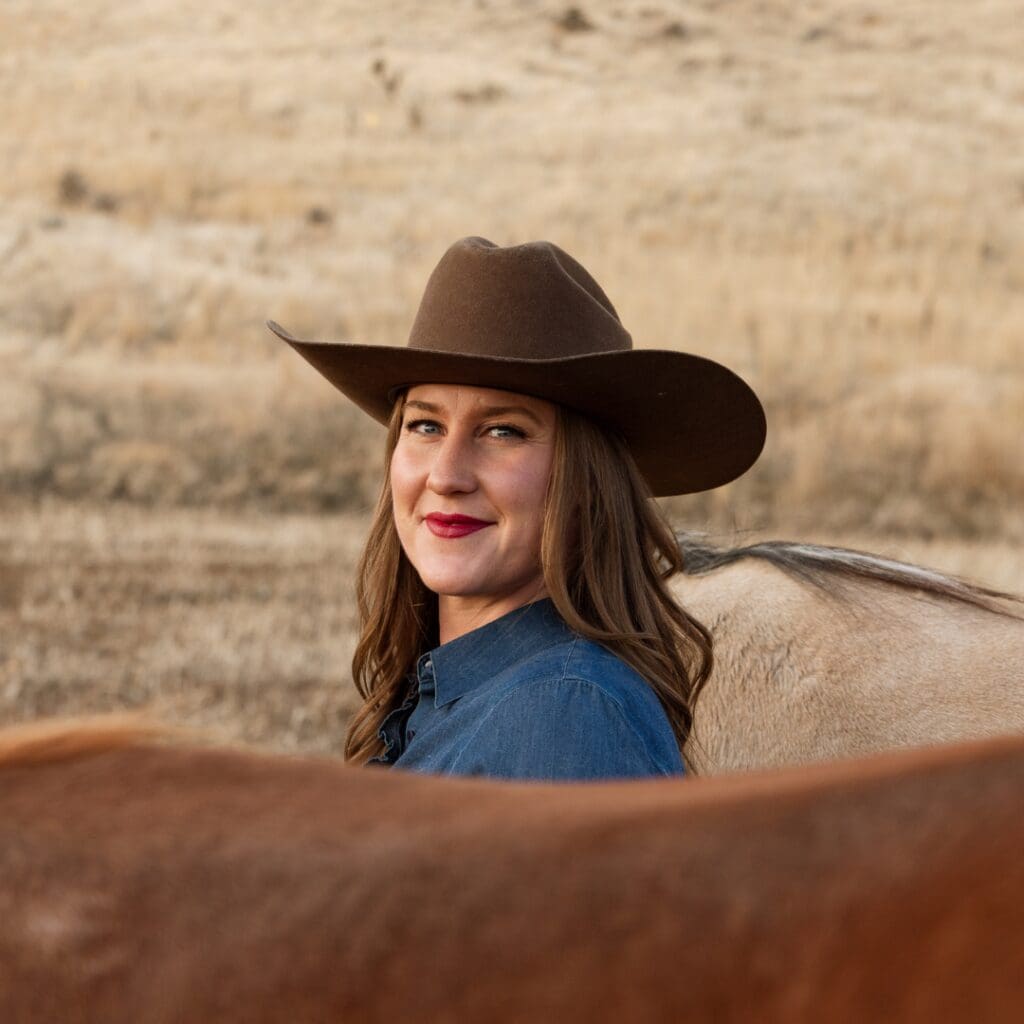
Mental Coach & Founder, Resilient Reiner
Read Next
Ready for more speed+confidence in the saddle?
Discover the 4 Lies That Undermine Your Self-Esteem in the Saddle (And How to Defeat Them)
If pressure, overthinking, or show nerves have been getting in the way of your best rides, 5 Days to Confident Competitor is a simple place to start.
This five-day training helps you understand what happens in your brain and body when the pressure rises, so you can begin building tools to steady yourself, communicate more clearly with your horse, and ride with more confidence.
Start Building Show-Pen Confidence
I'm ready to stop show nerves →
Your horse feels what you bring into the saddle.
When pressure hits, your body, timing, focus, and confidence all affect the ride your horse gets.
Nicole Burnett is a mental performance coach for western riders who want their mindset to match their skill, their horse, and their goals.
Through practical mindset coaching and nervous system training, Nicole helps riders stay steady, communicate more clearly, and ride more effectively — whether they’re rebuilding confidence at home, sharpening their show-pen mindset, or preparing to compete on the national stage.
Work With Nicole
Explore ways to work with Nicole →
