Have you ever had the best ride of your life when absolutely nobody was watching?!
Then you turn on the camera, your trainer walks into the arena, or suddenly there’s a judge sitting at C…and everything changes.
Your breathing gets shallow. Your upper body gets a little tighter. You start thinking about what you’re doing instead of just riding.
And suddenly, the rider who felt so good five minutes ago seems to disappear.
We tend to accept this as one of those universal truths of riding: Of course I ride better when nobody is watching.
But is that actually true?
Or is it a story you’ve told yourself so many times that your brain has gotten really, really good at proving it?
What a bedtime story taught me about riding under pressure
This whole idea came to me in a slightly unexpected place.
I was reading a bedtime story with my little boy called Mike Mulligan and His Steam Shovel.
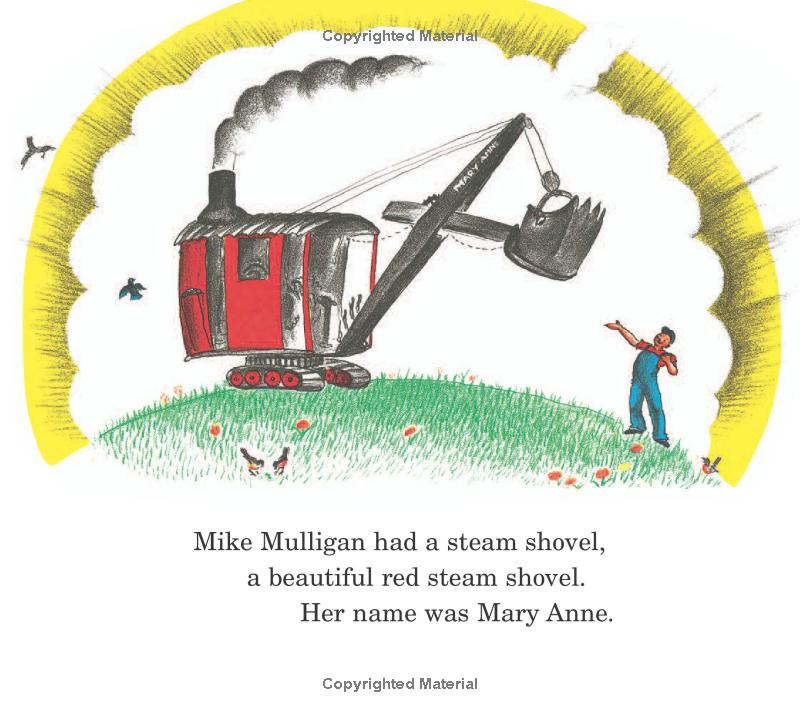
Mike and his steam shovel, Marianne, work together digging canals, roads, and basements. Eventually, they take on a huge challenge: digging the cellar for a new town hall in a single day.
People start coming to watch. The fire department comes. The school comes. People come from surrounding villages.
And the more people who show up, the faster and better Mike and Marianne work.
That really got me thinking about the stories we tell ourselves as riders.
We love talking about those great show horses that know when it’s go time. The horse walks into the arena, feels the atmosphere, and cranks it up to 11.
We say they love the spotlight. They love performing. They bring the heat when it matters.
But then we tell a completely different story about ourselves.
“I ride better when nobody is watching”
It’s almost a trope in the horse world.
You’ll have the best ride you’ve ever had when you’re alone at the barn and nobody is watching. You’ll have an amazing ride at 2 a.m. in the outside arena at the horse show. You’ll nail everything in the warm-up pen.
Then someone watches. Or the judge is there. Or your trainer is standing at the rail.
Suddenly, the story becomes:
- I get nervous when people watch me.
- I ride better alone.
- I’m more relaxed when nobody is watching.
There can absolutely be a kernel of truth in those stories.
But the important question is:
Are you boxing yourself in with a story that doesn’t serve you?
The more you tell yourself that you can only ride your best under certain circumstances, the more you reinforce that expectation.
If your brain believes your best rides only happen when nobody is watching, what happens when it’s time to walk into the show pen?
Try this the next time you ride
Here’s an easy little mental-performance experiment:
Film yourself riding.
Not because you need content for Instagram. Not even because you need to go back and critique the video.
Just press record and notice what happens.
For a lot of riders, the simple act of turning on a camera adds pressure. Your breathing might get more shallow. Your body might freeze. Maybe you tip forward or suddenly become hyperaware of everything you’re doing.
Once the camera is recording, there’s a feeling that you can’t go back and fix it. It is what it is.
That makes filming yourself a really useful way to add a little pressure to an ordinary ride and practice staying connected to your riding without needing to haul to a horse show.
What story are you telling yourself?
This is where I want you to get curious.
Maybe your story sounds like:
- I don’t do well when I’m riding in front of other people.
- I don’t do well when the judge is watching.
- I can only relax when I’m riding alone.
I’m not saying there can’t be truth behind your experience.
Maybe you really do ride more consistently during the off-season because you have more time to train. Maybe summer is chaotic between horse shows, vacations, kids, and everything else going on.
The question isn’t whether you can find evidence for your story.
The question is whether that story is helping you become the rider you want to be.
There’s a big difference.
Sometimes the show pen isn’t the most stressful place
I shared this idea on an Instagram Live, and someone told me about her daughter who rides with a top trainer.
Interestingly, she finds riding with that trainer more stressful than showing. She actually performs better at shows than she does at home in her lessons.
Honestly, I can completely understand how that happens.
When you work closely with a trainer, they know you and your horse. They know you could have plussed that maneuver but played it safe. They know when you edged that spin. They know all the little ins and outs of your riding.
If you find that trainer intimidating in any way, that can absolutely affect your mental state and your performance.
Then you walk into the arena and think, It’s just me and this judge who doesn’t know me.
Suddenly, the pressure feels lighter.
Again, it comes back to the story:
- Here’s when I do my best.
- Here’s how my trainer treats me.
- Here’s how I behave when somebody is watching.
The important question isn’t necessarily whether that story is objectively true.
Is continuing to tell yourself that story serving you?
What if you expected to ride better when people watched?
This is where we can borrow a little bit from Mike Mulligan and his steam shovel.
Instead of I ride worse when people watch me, what if your story became:
I ride better when people watch me.
Maybe you even tell yourself, I’m going to ride 5% better anytime somebody starts watching me.
It might feel strange at first. That’s okay.
You’re becoming aware of the story playing in the background so you can decide whether you want to keep reinforcing it.
Ask yourself:
- Is this story serving me?
- Is this story helpful?
- Or is this story holding me back?
If it is holding you back, what would be a more helpful story to tell yourself instead?
Your riding story affects what you do next
This doesn’t stop with riding alone versus riding in front of other people. We tell ourselves stories about everything. Constantly. Here are stories I hear riders say that don’t serve them.
- What’s the point in setting big goals? They never come true anyway.
- I still have so much more to learn before I can start.
- Why is this working for everybody else except me?
- Everything needs to be perfect or it’ll fall apart.
- I should already be more successful by now.
- I just need more time in the day.
These stories don’t simply sit quietly in the back of your mind. They influence your actions.
If you believe you need to learn everything before you’re ready, you can spend forever taking lessons, reading books, and putting your horse in training without ever actually entering the horse show.
At some point, you have to be willing to apply the knowledge.
If you believe everything needs to be perfect, uncertainty can feel like an all-or-nothing gamble. And if you believe you should already be further ahead, it becomes incredibly easy to look around at everyone winning and wonder why success seems easier for them.
You have to notice the story before you can change it
So here’s what I want you to think about:
What is the number one story you tell yourself about your riding?
What do you tell yourself about the progress you’re making—or not making? What do you tell yourself about your ability to compete? What do you believe happens when somebody watches you ride?
This can be hard to identify because some of these stories are so ingrained that we don’t even recognize them as stories anymore. They just feel like facts.
You can’t change the story running your riding until you recognize that it is a story.
The stories we repeatedly tell ourselves influence the actions and behaviors we take.
So notice yours.
Then ask yourself: Is this helping me move forward, or is this keeping me exactly where I am?
Ready to train the mental side of your riding?
If you know how to ride at home but struggle to access that same confidence when the pressure rises, that’s exactly the kind of mental skill we work on in 5 Days to Confident Competitor.
This isn’t about waiting until you magically stop getting nervous. It’s about building the mental skills to stay connected to your riding when people are watching, when the pressure is real, and when the ride actually matters.
Start 5 Days to Confident Competitor and begin training the confidence you want to bring into the arena.
Happy Trails!
Nicole Burnett
Mental Coach for Riders
Read Next
Read this if you ride better at home than at shows
Get Motivated to Ride With My Dark Mental Hack to Crush the Competition With Unbeatable Consistency
If pressure, overthinking, or show nerves have been getting in the way of your best rides, 5 Days to Confident Competitor is a simple place to start.
This five-day training helps you understand what happens in your brain and body when the pressure rises, so you can begin building tools to steady yourself, communicate more clearly with your horse, and ride with more confidence.
Start Building Show-Pen Confidence
I'm ready to stop show nerves →
Your horse feels what you bring into the saddle.
When pressure hits, your body, timing, focus, and confidence all affect the ride your horse gets.
Nicole Burnett is a mental performance coach for western riders who want their mindset to match their skill, their horse, and their goals.
Through practical mindset coaching and nervous system training, Nicole helps riders stay steady, communicate more clearly, and ride more effectively — whether they’re rebuilding confidence at home, sharpening their show-pen mindset, or preparing to compete on the national stage.
Work With Nicole
Explore ways to work with Nicole →
