Whether you’ve experienced it in the past, are going through it right now, or have watched a barn-mate struggle with it, almost every rider experiences a riding rut at some point.
It doesn’t necessarily mean you’ve suddenly lost your abilities. It doesn’t mean your trainer hates you or a judge is out to get you. Sometimes you’ve simply reached a point where continuing to improve requires something different from you.
The horse world keeps evolving. Breeding gets better. Training gets better. Competition gets tougher. Can every one of us keep improving at the same pace every single day? Of course not.
But that doesn’t mean you stop growing.
Think about any profession where expertise matters. You probably wouldn’t want a surgeon who hadn’t updated their medical knowledge in 30 years. You wouldn’t hire an architect who hadn’t learned anything new since 1962. And you probably wouldn’t order a custom reining saddle and expect something designed for the Pony Express.
The same principle applies to riding. You don’t need to panic about constantly keeping up with everyone around you, but continuing to learn, adapt, and challenge yourself keeps you moving forward.
So why do riders get stuck?
Think back to when you first learned to ride. The learning curve was huge because almost everything was new. You relied on trainers, family members, mentors, and more experienced riders while you developed your skills.
Over time, you gained knowledge, feel, and experience. You became more capable.
And strangely enough, that’s often when the plateau becomes more noticeable.
Once you’ve mastered the basics, progress isn’t always as obvious. You might have the horse, the skills, and the goals but still feel like you’re perpetually stuck in the middle.
Sometimes the obstacle really is technical. You need better timing, more experience, or additional training.
But sometimes the thing holding you back isn’t another riding skill.
It’s your confidence.
You hesitate when you need to commit. You ride defensively because you’re afraid of making a mistake. You know what to do at home but struggle to access the same ability when the pressure goes up.
That’s why breaking through a riding rut sometimes requires working on more than your physical riding skills.
The misconception: It’s all about skills
Picture a dedicated rider who spends hours improving their position, timing, and technique. They take lessons, practice consistently, and work hard to become better.
Yet somehow, they still feel stuck.
The natural assumption is: I must need to become a better rider.
Maybe.
But skill and confidence aren’t the same thing.
You can have the technical ability to perform a maneuver and still hesitate when it matters. You can know exactly what your trainer wants and second-guess yourself the moment you enter the show pen.
Confidence is what helps you access the skills you’ve already developed.
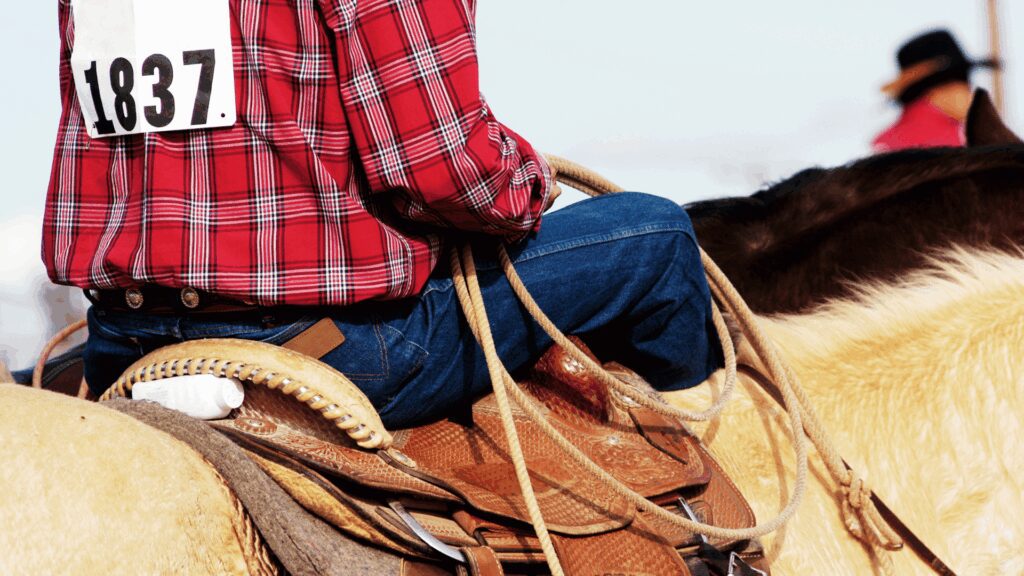
Confidence helps you face fear
Moving into a higher level of competition, trying a difficult maneuver, or riding through a challenging situation requires some willingness to leave your comfort zone.
Confidence doesn’t mean you never feel fear. It helps you act effectively even when fear shows up.
Skills alone aren’t enough
You can be an incredibly skilled rider, but those skills only help when you’re able to use them.
If self-doubt causes you to hesitate, ride defensively, or abandon your decisions halfway through, your performance may not reflect what you’re actually capable of doing.
Your expectations affect how you ride
When you repeatedly tell yourself I can’t do this, that belief starts influencing your decisions.
You hesitate. You avoid opportunities. You notice evidence that confirms the story you already believe.
That can create a cycle where a lack of confidence keeps reinforcing itself.
Confidence changes your performance
Think about some of your best rides. Chances are, you weren’t analyzing and second-guessing every single movement.
You were riding.
Confidence can help you stay focused, make clearer decisions, recover from mistakes, and remain connected to your horse instead of getting trapped inside your own head.
Sometimes getting out of a riding rut isn’t about learning another skill. It’s about trusting yourself enough to use the skills you already have.
7 ways to build your confidence as a rider
If confidence is part of what’s keeping you stuck, it can be trained just like any other mental skill.
1. Set challenging but achievable goals
Give yourself something to work toward without making every goal so enormous that success constantly feels out of reach. Smaller accomplishments give your brain evidence that you’re progressing.
2. Visualize the ride you want
Mental imagery gives you an opportunity to rehearse how you want to ride before you ever enter the arena. Picture yourself staying focused, making decisions, and responding confidently when things don’t go perfectly.
3. Pay attention to your self-talk
Notice what you repeatedly tell yourself about your riding. If your internal commentary constantly reinforces doubt, start challenging those thoughts with something more useful and accurate.
4. Learn from people you trust
A good trainer, mentor, or coach can help you identify both what needs improvement and what you’re already doing well. Sometimes you need an outside perspective to recognize progress you’ve stopped noticing.
5. Choose progress over perfection
One imperfect ride doesn’t erase your improvement. Pay attention to the small wins, better decisions, quicker recoveries, and moments that show you’re moving forward.
6. Get comfortable being uncomfortable
Fear and nerves don’t automatically mean you’re doing something wrong. Sometimes they mean you’re stretching beyond what feels familiar.
You don’t need to eliminate every uncomfortable feeling before taking the next step.
7. Keep showing up
Confidence grows through experience. Consistent, intentional time in the saddle gives you opportunities to practice your skills, work through challenges, and collect evidence that you can handle more than you think.
Confidence can help you move beyond the plateau
Progress as a rider will never be perfectly linear. There will be seasons where you improve quickly and others where it feels like nothing is changing.
When you hit one of those plateaus, don’t automatically assume you need another technique, another horse, or another hundred hours in the saddle.
Ask yourself:
Do I need more skill here—or do I need more confidence using the skills I already have?
That distinction matters.
Keep learning. Keep challenging yourself. Keep building your technical abilities. But give the mental side of your riding the same attention.
Because sometimes the next level isn’t waiting for you to become a dramatically better rider.
It’s waiting for you to trust the rider you’ve already become.
Ready to break out of your riding rut?
If you feel capable at home but start questioning yourself when the pressure rises, 5 Days to Confident Competitor can help you start strengthening the mental side of your riding.
Over five days, you’ll work on practical mental skills to quiet self-doubt, trust what you know, and show up more confidently when it matters.
Join 5 Days to Confident Competitor →
Sending you guys all of my love,
Happy Trails!
Nicole Burnett
Mental Performance Coach for Western Riders
Read Next
How to Be Consistent and Get Results as a Rider (Even With a Full-Time Job)
Mid-Year Riding Goals Check-In: Two Things Every Rider Needs to Hear Today
If pressure, overthinking, or show nerves have been getting in the way of your best rides, 5 Days to Confident Competitor is a simple place to start.
This five-day training helps you understand what happens in your brain and body when the pressure rises, so you can begin building tools to steady yourself, communicate more clearly with your horse, and ride with more confidence.
Start Building Show-Pen Confidence
I'm ready to stop show nerves →
Your horse feels what you bring into the saddle.
When pressure hits, your body, timing, focus, and confidence all affect the ride your horse gets.
Nicole Burnett is a mental performance coach for western riders who want their mindset to match their skill, their horse, and their goals.
Through practical mindset coaching and nervous system training, Nicole helps riders stay steady, communicate more clearly, and ride more effectively — whether they’re rebuilding confidence at home, sharpening their show-pen mindset, or preparing to compete on the national stage.
Work With Nicole
Explore ways to work with Nicole →
