Why does your horse ride better for your trainer? Are you just doomed?
You’re dedicated. You ride. You pour your heart and soul into your horse. You show up and you grind away. So why does your horse ride better for your trainer? The gap shouldn’t be that large… should it?
There are few things more humbling than handing your horse to your trainer… and watching your horse suddenly look like a completely different animal.
The same horse that felt stiff, distracted, sticky, heavy, dull, anxious, or argumentative for you five minutes ago now looks soft, broke, willing, and easy.
The circles are smoother.
The stops are cleaner.
The transitions look effortless.
And meanwhile you’re standing there trying not to spiral.
You start wondering things like:
“What am I doing wrong?”
“Why does my horse listen to them and not me?”
“Does my horse respect them more?”
“Am I just not good enough for this horse?”
Why does my horse go better for my trainer?!
If you’ve ever felt that way, you are very, very normal.
And more importantly: this usually does not mean your horse likes your trainer more, and it does not mean you’re failing.
But it does mean something is changing when your trainer gets on.
That’s the good news.
Because if something changes, something can be learned.
What it looks like when your horse rides better for your trainer
Let’s say you’re schooling at home and your horse feels sticky in the bridle and kind of blah. You’re trying to get him softer, trying to help, trying to fix the feel, and somehow he just gets heavier. The more you work at it, the more “in it” you both get.
Then your trainer swings a leg over.
A few minutes later, the horse is moving more freely. The face looks quieter. The horse is softer through the body. Nothing dramatic happened. No big correction. No magical trick. It just suddenly looks… easier.
And now you’re standing there thinking,
“Cool. Awesome. Apparently my horse is a professional only when someone else is riding him.”
But that moment usually is not proof that your trainer has some mystical gift you’ll never have.
More often, it’s proof that the ride changed in some very specific ways:
- the timing got cleaner
- the cues got simpler
- the rider got less emotionally involved
- the horse got a clearer picture
- standards got higher
And yes, mindset is often a bigger part of that than riders realize.
Don’t take it personal if your horse rides better for your trainer
A lot of riders take this personally.
They make it mean they’re ruining their horse.
They make it mean they’re not talented enough.
They make it mean their horse has no faith in them.
They make it mean everyone else can do it except them.
That’s usually not what’s happening.
Most of the time, your horse is not making a statement about your worth.
Your horse is responding to clarity.
To timing.
To consistency.
To feel.
To energy.
To whether the ride feels simple and understandable.
That’s it.
That’s the number one reason why your horse rides better for your trainer.
Horses are incredibly honest that way. They don’t care about your title, your insecurity, your inner critic, or the dramatic story your brain is trying to write. They respond to what the ride feels like in that moment.
So before we go any farther, let’s clean up the story.
Your horse riding better for your trainer is not proof that you are hopeless.
It is feedback.
And feedback is useful.
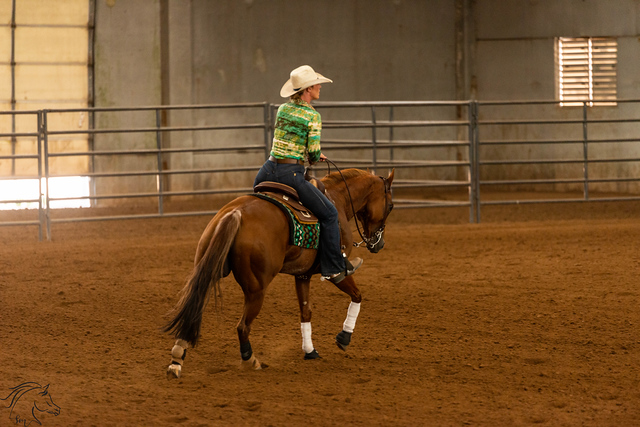
Why horses often go better for trainers
There are a few common reasons why a horse may ride better for your trainer, and most of them have a lot less to do with “respect” or natural talent than people think.
1. Your trainer is usually more emotionally neutral
This is a big one.
Your trainer gets on your horse without all your mental baggage attached to the ride.
They’re usually not thinking:
“Please let this go well today.”
“I hope I don’t mess this up again.”
“This is the part where everything falls apart.”
“Everyone is going to know I can’t do this.”
They’re just riding what is there.
That matters more than riders realize.
Because when you’re worried, frustrated, embarrassed, or desperate for it to go well, your body changes. Your breathing changes. Your timing changes. Your hands change. Your decision-making changes.
Even if you don’t realize it.
Your horse doesn’t just feel the cue. Your horse feels the version of you delivering it.
A trainer is often more neutral, more matter-of-fact, and less emotionally loaded. That creates a ride that feels quieter and clearer from the very first stride.
2. Their timing is cleaner
A lot of riders assume trainers get more done because they are stronger, firmer, or more “in charge.”
Sometimes that’s part of it. But very often, the bigger difference is timing.
They know:
- when to ask
- how much to ask
- when to release
- when to wait
- when to leave the horse alone
That last part matters a lot.
Many horses do not need more help. They need less noise.
A good trainer often gets a better response not because they are doing more, but because they are doing less — and doing it at the right time.
That’s a huge difference.
3. They aren’t micromanaging every second
When riders want something badly, they tend to get busy.
Busy with their hands.
Busy with their legs.
Busy in their head.
Busy trying to fix every tiny thing before it becomes a bigger thing.
And ironically, all that effort often makes the horse feel worse.
Trainers are usually better at letting the ride breathe.
They’ll make a correction, then wait.
They’ll ask a question, then let the horse search.
They don’t need to manage every stride like it’s a crisis.
A lot of riders are not actually under-riding. They are over-riding.
They are over-helping, over-cueing, over-correcting, and overthinking.
Trying harder is not always the answer. Sometimes trying harder is exactly what gums the whole thing up.
4. Your cues may not always mean the same thing
This is not a judgment. It’s just a common reality.
Many riders are less consistent than they think.
Sometimes they ask softly and mean it.
Sometimes they ask softly and then give up.
Sometimes they nag.
Sometimes they hold too long.
Sometimes they escalate emotionally.
Sometimes they release late.
Sometimes they correct one day and ignore the same thing the next.
That makes the ride harder for the horse to read.
Trainers tend to be more consistent. Cue means cue. Boundary means boundary. Release comes when the horse finds the answer. The standards don’t wobble all over the place.
That consistency helps a horse relax.
Not because the trainer is scary.
Because the trainer is predictable.
And predictability is a gift to a horse.
5. Your trainer rides the horse in front of them. You may be riding your thoughts.
This one is huge, especially if you’re a rider who puts a lot of pressure on yourself.
A trainer is usually focused on what is happening right now.
This stride.
This transition.
This response.
This moment.
A non-pro rider, on the other hand, is often riding all kinds of things that are not actually happening.
They’re riding the missed lead they’re afraid is coming.
They’re riding the spook they’re bracing for.
They’re riding the stop that went wrong last week.
They’re riding the embarrassment they felt at the last show.
So instead of staying present, they start preloading tension into the ride.
And the horse feels that immediately.
When you ride the fear of what might happen, your horse stops getting a fair, present-moment ride.
That doesn’t make you weak. It makes you human.
But it does affect the ride.
This doesn’t mean your trainer is magic
Let’s say that plainly.
Your trainer may be very skilled. Great. That’s part of why you’re paying them.
But this isn’t about some mystical trainer superpower that you’ll never have.
This is usually about a combination of:
- more neutral energy
- clearer timing
- fewer unnecessary cues
- more consistency
- less emotional interference
- more present-moment riding
Those are all things that can be learned.
Which means this gap between how your horse goes for your trainer and how your horse goes for you is not a fixed identity statement.
It’s a skill gap.
A feel gap.
A regulation gap.
A clarity gap.
And those things can close.
What your horse is actually showing you
When your horse rides better for your trainer, your horse is giving you information.
Your horse may be showing you:
- that your body gets tight when you doubt yourself
- that your cues get muddy when you get nervous
- that you overhelp when you want it too badly
- that your release is later than you think
- that you lose feel when you start trying to force a result
- that your brain gets so loud you stop riding the horse and start riding your thoughts
That is not bad news.
That is useful news.
Because once you stop making it mean “I’m terrible,” you can finally start asking better questions.
What to do instead of spiraling
No more existential dread where you ask, “Why does my horse ride better for my trainer?” Here’s where this becomes productive.
1. Stop using your trainer’s ride as proof against yourself
Instead, watch your trainer ride your horse to learn — not to self-destruct.
That distinction matters.
If your inner dialogue is:
“Of course. My horse hates me. I ruin everything. Why can’t I ride like that?”
You will learn almost nothing.
If your inner dialogue is:
“Interesting. What changed? What got clearer? What got quieter? What did my horse respond to?”
Now you’re in business.
2. Ask better questions
Don’t just stand there feeling bad. And definitely ask questions beyond, “Why does my horse ride better for my trainer?”
Get specific. One of my favorite things to say and a pillar of my work is the belief that curiosity is a superpower. So get curious!
Ask your trainer things like:
- What changed the most when you got on?
- Where do I start over-riding?
- What are you doing less of than I am?
- What did you feel right before he softened?
- What’s the first thing you’d change in my ride?
- Is this a timing issue, a confidence issue, or a clarity issue?
You are trying to shorten the gap between “horse looks better” and “I understand why.”
That’s where progress happens.
3. Work on one thing at a time
This is so important.
A lot of riders watch their trainer ride better and then decide they need to fix everything immediately.
Now they’re trying to change their hands, seat, timing, focus, confidence, breathing, body control, and mental game all in one ride.
That usually makes them even more unnatural.
Pick one thing.
Maybe the one thing is:
- releasing faster
- riding more forward
- breathing before a transition
- softening your hand
- waiting instead of picking
- keeping your leg quieter
- not correcting every tiny thing
One thing done consistently beats ten things done frantically.
4. Pay attention to your nervous system, not just your horsemanship
This is where a lot of riders miss the point.
They assume the problem is entirely technical.
And yes, sometimes it is technical.
But a lot of the time, the technical issue gets worse because the rider is dysregulated.
This is a ridiculously overlooked puzzle piece when it comes to answering the question of why does your horse ride better for your trainer.
When you are tense, rushed, embarrassed, afraid, or trying to prove something, your ride changes.
So part of becoming the rider your horse goes better for is learning to regulate yourself before you start micromanaging your horse.
That might look like:
- taking one slow breath before you ask for something
- narrating your ride so your brain stays present
- noticing when urgency enters your body
- resetting after a mistake instead of escalating
- letting one imperfect moment stay one imperfect moment
You do not need to be emotionless.
You do need to be steady enough that your horse is not constantly riding your anxiety with you.
5. Let the goal be communication, not performance
Sometimes riders get so consumed with wanting the horse to “look good” that they stop focusing on whether the horse actually understands.
Those are not always the same thing.
The best trainers are not just chasing a polished picture. They are building a horse that can understand, respond, and relax within the work.
You need that too.
Your horse doesn’t need a more intense version of you.
Usually, your horse needs a more present one.
The deeper truth of why your horse rides better for your trainer
Your trainer’s job is not just to make your horse look better than you do on him.
Your trainer’s job is to help you become the rider your horse can go well for.
That takes time.
It takes reps.
It takes humility.
It takes self-awareness.
It takes a willingness to be coached.
And it takes emotional maturity not to turn every hard ride into a personal identity crisis.
Because here’s the truth:
Your trainer may always have a little more feel. A little more timing. A few more tools. That’s normal.
But the goal is not for your horse to only feel good for your trainer.
The goal is for you to become calmer, clearer, quieter, and more effective — so your horse starts finding that same ride with you.
And when that happens, it’s not because you became someone else.
It’s because you got more honest. More consistent. More present. More skilled.
That’s where the breakthrough is.
Final thought on why your horse rides better for your trainer
So if your horse rides better for your trainer right now, don’t panic.
And please don’t turn it into a dramatic story about how you’re not enough.
Get curious instead.
Because that gap you feel? That frustrating gap between what your trainer can get and what you can get?
That gap is not a verdict.
It’s a roadmap.
And once you stop taking it personally, you can finally start learning from it.
If this hit home for you, and you know part of what’s happening in the saddle is not just technical — it’s nerves, pressure, overthinking, second-guessing, or your brain getting loud the second it matters — that’s exactly why I created 5 Days to Confident Competitor.
It’s a short, practical training to help you stop spiraling, regulate your nervous system, and ride with more clarity and confidence when the pressure is on.
Because sometimes the problem isn’t that you need more horsemanship advice.
Sometimes you need help getting your mind back on your side.
Click here to check out 5 Days to Confident Competitor.
Ride on with confidence,
Nicole
Read Next
If pressure, overthinking, or show nerves have been getting in the way of your best rides, 5 Days to Confident Competitor is a simple place to start.
This five-day training helps you understand what happens in your brain and body when the pressure rises, so you can begin building tools to steady yourself, communicate more clearly with your horse, and ride with more confidence.
Start Building Show-Pen Confidence
I'm ready to stop show nerves →
Your horse feels what you bring into the saddle.
When pressure hits, your body, timing, focus, and confidence all affect the ride your horse gets.
Nicole Burnett is a mental performance coach for western riders who want their mindset to match their skill, their horse, and their goals.
Through practical mindset coaching and nervous system training, Nicole helps riders stay steady, communicate more clearly, and ride more effectively — whether they’re rebuilding confidence at home, sharpening their show-pen mindset, or preparing to compete on the national stage.
Work With Nicole
Explore ways to work with Nicole →
