Why western riders who feel solid at home can fall apart at shows—and how to finally change it
If you are a western rider who feels pretty decent — maybe even really good — at home, but your show rides do not reflect the rider you know you are, this is for you.
Because that gap is brutal.
At home, you can feel your horse. You can think. You can make decisions. You can ride with timing, intention, and feel. You know what your circles should feel like. You know how your horse responds when you stay soft, clear, and present. You know there is a better rider in you than what keeps showing up in the pen.
Then show day comes, and somehow everything feels different.
You get tighter. Quicker. More hesitant. More mentally loud. You start micromanaging. You start overthinking. You start riding in a way that feels weirdly unlike you. Then you walk out of the pen frustrated, replaying everything and wondering why you keep doing this when you know full well you can ride better than that.
And that is the part that stings most.
Not only the disappointing run. Not only the missed opportunity. But the fact that deep down, you know:
That was not the real you.
So let me say something right up front.
Your problem is not that you suck.
Your problem is not that you do not care enough.
Your problem is not that you are weak.
And your problem is not necessarily that you need more saddle time.
For many riders, the real issue is this:
Pressure changes how you ride, and nobody ever taught you how to train for that.
That is why this keeps happening.
And that is also why it can change.
The hardest part is knowing that wasn’t the real you
This is what makes show struggles so frustrating for capable riders.
You are not clueless.
You are not lazy.
You are not underprepared in some obvious way.
You ride. You work. You care. You know your horse. You know the pattern. You know better.
But the second the pressure goes up, everything gets louder.
The warm-up pen feels more chaotic.
Your mind starts scanning for what could go wrong.
Your body starts bracing.
You get mentally fast.
You start trying harder instead of riding better.
You second-guess.
You overcue.
You lose softness.
You start riding not to mess up instead of riding with clarity.
And afterward, the story becomes:
“What is wrong with me?”
“Why can’t I do at shows what I do at home?”
“Why do I keep doing this?”
“Why can’t I just be more confident?”
That story is brutal because it makes the problem sound personal.
Like this is proof that you are not cut out for showing.
Like this is a flaw in your character.
Like this is evidence that maybe you are not actually as capable as you thought.
It is not.
This is not a character flaw.
It is not proof you are broken.
It is not some deep sign that you are not meant to do this.
It is a pattern.
And patterns can be trained.
You do not have a talent problem. You have a pressure problem.
This is the reframe I want more western riders to understand.
If you can ride well at home, your ability did not magically disappear when you pulled into the show grounds.
You did not suddenly forget how to ride in the warm-up pen.
You did not become untalented when they called your name.
You did not lose all your skill because now someone is watching.
What changed was your internal state.
The pressure got higher. The stakes felt bigger. Your body responded. Your focus changed. Your timing changed. Your decision-making changed. Your access to confidence changed.
That is why a rider can look organized, capable, and clear at home… then tense, rushed, and scrambled at the show.
The show pen did not create a whole new rider.
It exposed what happens in you under pressure.
And that is actually good news.
Because if the issue were “I am not good enough,” that would be a painful dead end.
But if the issue is “I have an untrained pressure response,” now we have something real to work with.
Now we can train the actual problem.
Confidence matters. But most riders have never been taught how to build it.
I want to be very clear about this: confidence matters.
A lot.
And yes, I absolutely believe confidence is a skill you can build.
The problem is not confidence. The problem is that most riders have never been taught how to build confidence when the pressure is real.
Instead, they get fed vague advice like:
Relax.
Trust yourself.
Trust your horse.
Stop overthinking.
Be more confident.
And look — none of that is entirely wrong. But none of it tells you what to do.
If your body is already activated, your mind is already spiraling, and you are already halfway out of the present moment, “be more confident” is not a method.
It is a nice idea with no handles.
Real confidence is not something you wait around to feel one day. It is something you build on purpose.
You build it through the way you train your nervous system.
You build it through the way you respond to pressure.
You build it through the way you recover from mistakes.
You build it through the patterns you practice before the show, during the show, and after the show.
Confidence is not random.
It is trainable.
And when riders finally understand that, everything starts to change.
Why you can feel fine at home and totally different at the show
When the pressure goes up, your system changes.
You may hold your breath without realizing it.
You may brace through your chest, shoulders, hands, or hips.
You may get quick in your body or quick in your mind.
You may start riding defensively.
You may start chasing instead of feeling.
You may fixate on what could go wrong.
You may lose your timing.
You may go mentally blank.
You may make one mistake and immediately spiral.
That is not you being dramatic.
That is not you being weak.
That is not you failing some secret test of toughness.
That is your nervous system doing what nervous systems do when something feels high-stakes.
The problem is that riding well requires access to things that get much harder to reach in that state.
Things like:
- timing
- softness
- feel
- patience
- precision
- clear decision-making
- connection
- staying in the present moment
And for western performance riders, those things matter a lot.
You get a little tight, so your horse gets a little tight.
You get mentally fast, so the ride gets physically fast.
You start pushing, fixing, chasing, or protecting.
You lose flow.
You lose feel.
You lose access to the ride you know is in there.
Then afterward, you are left with that awful feeling of, “I know I can do better than that.”
You can.
But wanting that and knowing how to access it under pressure are two very different things.
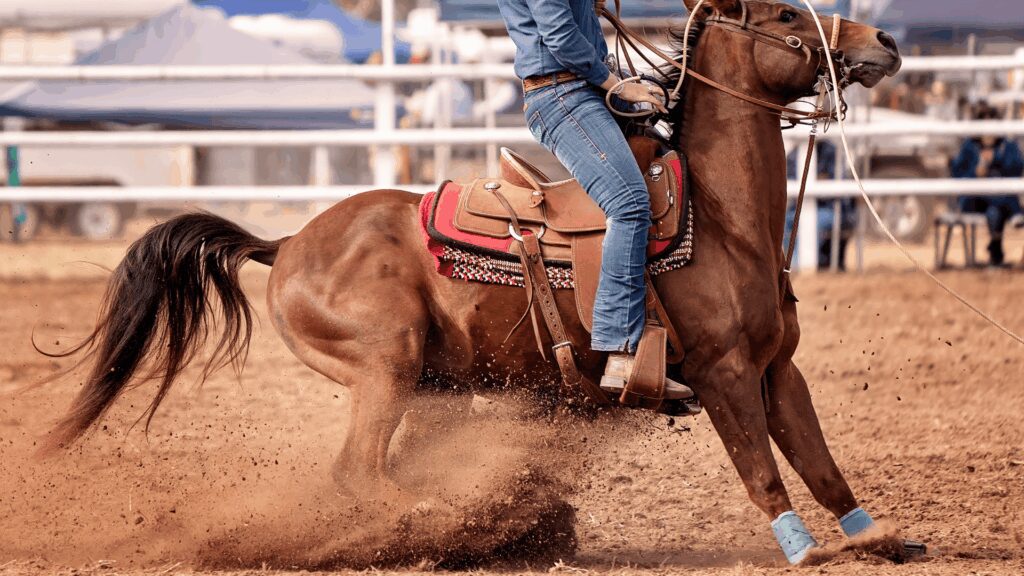
You do not need to become a different rider
This is one of the biggest things I wish riders would really let sink in:
You do not need to become a different rider. You need better access to the rider you already are when the pressure is on.
That is a completely different goal.
You are not trying to become robotic.
You are not trying to stop caring.
You are not trying to never feel nerves again.
You are not trying to manufacture some fake show-day alter ego.
You are learning how to stay more connected to yourself, your horse, and the moment in front of you when the environment gets louder and the stakes feel bigger.
That is a skill.
Actually, it is a set of skills.
And once you start training those skills, the whole conversation changes.
What actually helps riders do better at horse shows
If you want to do better at horse shows, the answer is not only “ride more.”
Of course solid riding matters.
Of course having your horse prepared matters.
Of course the work at home matters.
But for the rider who already knows that and is still not showing up the same way in the pen, the missing piece is internal.
You need to train the side of performance most riders never get coached on directly.
That means learning how to:
Regulate
Work with your nervous system so pressure does not hijack the ride before it starts.
Rewire
Change the mental and emotional patterns that keep firing on show day.
Reclaim
Get back access to the rider underneath the tension, overthinking, and self-protection.
Reinforce
Build confidence through repetition, proof, recovery, and better patterns so you stop feeding the same cycle.
That is where real change happens.
Not in pretending nerves are not there.
Not in giving yourself another pep talk.
Not in criticizing yourself harder after another disappointing run.
Real change starts when you train what is actually happening.
What to start doing differently before your next show
You do not need to overhaul your whole life overnight. But there are a few shifts that can make a real difference.
1. Stop making the goal “don’t be nervous”
That is not a useful goal.
Now you are fighting your own internal experience before the class even starts.
A better goal is this:
Can I stay present?
Can I come back quickly?
Can I keep riding the moment I am in?
That is far more powerful than trying to bully yourself into feeling nothing.
2. Train your response, not only your horse
Your horse is not the only one who needs preparation.
This is where so many riders get stuck. They put all their energy into the horse, the pattern, the maneuvers, the physical practice… and then expect themselves to magically be calm, clear, and confident under pressure.
That is not how it works.
Your response needs training too.
3. Catch the spiral earlier
A lot of riders think the problem is nerves.
Often, the bigger problem is how long they stay tangled up in them.
They feel pressure.
They tense up.
They notice it.
They judge it.
They start making it mean something.
Then they lose the ride they are actually in.
The faster you can notice, “I am leaving the moment,” the faster you can come back.
4. Have something to do in the moment
This is the part most riders are missing.
You do not need more things to agree with.
You need something to do when the pressure starts climbing for real.
Something usable.
Something simple.
Something that helps you interrupt the pattern before it takes over the ride.
That is when this starts becoming practical instead of inspirational.
Here is what this looks like in real life
Picture a rider who schools well at home.
Her horse feels honest. She can lope the pattern and feel organized, capable, and clear. She knows where she wants to look, when she wants to sit, how she wants to guide the run. At home, she looks like herself.
Then she gets to the show.
In the warm-up pen, every little thing starts to feel loaded. A sticky turn. A missed lead. A horse that feels a hair fresh. Instead of staying with the ride, she starts reading every little moment as proof that today might go sideways.
So she begins riding harder, not better.
She loses softness.
She starts over-managing.
Her body gets tighter.
Her mind gets louder.
By the time she goes through the gate, she is already half out of the ride.
Then the run confirms the fear.
Maybe she rushes a maneuver.
Maybe she gets behind after one bobble.
Maybe she never really settles in.
Maybe the horse feels different because she feels different.
And afterward, the conclusion is usually something like:
“I need more practice.”
“I need to stop being like this.”
“I need to be tougher.”
“I need more confidence.”
But when that rider starts working on regulation instead of only trying harder, things begin to shift.
She starts noticing the pressure response earlier.
She stops making nerves mean she is doomed.
She practices coming back to the present moment.
She learns how to interrupt the spiral instead of feeding it.
She builds a more reliable response.
And slowly, the show pen stops feeling like the place where her ability disappears.
Not because she never feels pressure again.
But because she knows what to do with it.
That is a massive difference.
What better show performance actually looks like
Doing better at horse shows does not mean you never feel nervous again.
It does not mean every ride is flawless.
It does not mean you become perfectly calm all the time.
It does not mean you stop caring.
It means:
- you recover faster
- you stay more connected
- you stop making one mistake mean the whole run is ruined
- you keep more access to your timing and feel
- your confidence becomes more earned and more reliable
- your show rides start to look more like your home rides
That is what most riders actually want.
Not fake confidence.
Not performative positivity.
Not another motivational quote saved on their phone.
They want to walk into the pen and ride more like themselves.
That is possible.
And it is trainable.
This is exactly why I created 5 Days to Confident Competitor
If this hit home, it is probably because you do not need more generic horse-show advice.
You need help with the part most riders were never taught:
how to work with your nervous system when the pressure is real, how to interrupt the spiral, and how to build confidence on purpose.
That is exactly why I created 5 Days to Confident Competitor.
It is a short, actionable 5-day audio training for western riders who ride better at home than they do at shows.
Inside it, I teach the real issue most riders are dealing with: not lack of effort, not lack of caring, not lack of saddle time — but lack of nervous system training.
And I teach you The Calm Switch — a tool I created to help riders regulate in the moment, when it actually counts.
Because you do not need more theory.
You need a way to start changing the pattern.
You need a way to stop getting pulled under by pressure every time it matters.
You need a first win.
That is what 5 Days to Confident Competitor is built to give you.
If you are tired of riding one way at home and another way at shows, this is your next step.
Start here.
Because the goal is not to become some completely different rider.
The goal is to become the rider who can access what she already has — even when the pressure is on.
Ride on with confidence,
Nicole
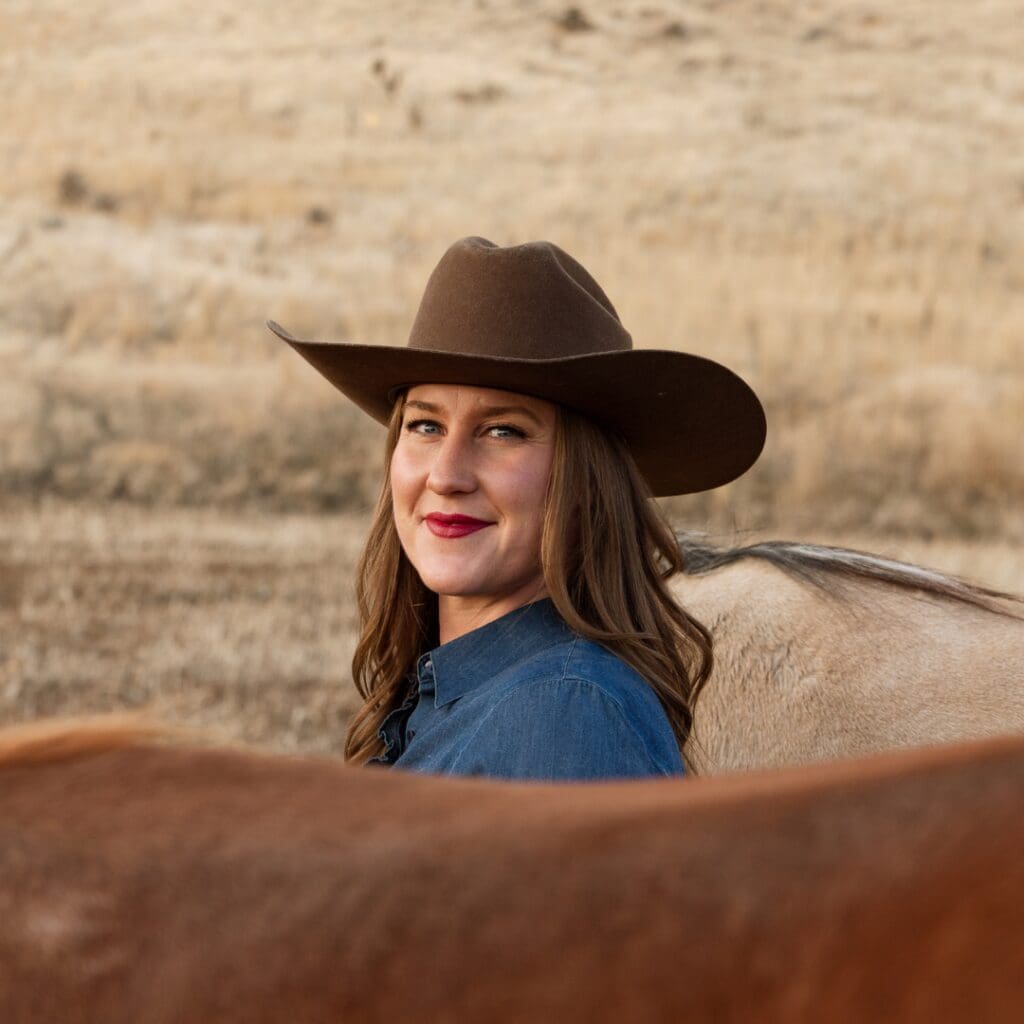
If pressure, overthinking, or show nerves have been getting in the way of your best rides, 5 Days to Confident Competitor is a simple place to start.
This five-day training helps you understand what happens in your brain and body when the pressure rises, so you can begin building tools to steady yourself, communicate more clearly with your horse, and ride with more confidence.
Start Building Show-Pen Confidence
I'm ready to stop show nerves →
Your horse feels what you bring into the saddle.
When pressure hits, your body, timing, focus, and confidence all affect the ride your horse gets.
Nicole Burnett is a mental performance coach for western riders who want their mindset to match their skill, their horse, and their goals.
Through practical mindset coaching and nervous system training, Nicole helps riders stay steady, communicate more clearly, and ride more effectively — whether they’re rebuilding confidence at home, sharpening their show-pen mindset, or preparing to compete on the national stage.
Work With Nicole
Explore ways to work with Nicole →
