Tired of Getting Jerked Around By Your Own Emotions? Master Your Emotions for a Better Ride.
1/11/24
Let’s talk about emotional resilience for riders. It’s one of those $10 mental coaching phrases I throw around when we’re talking about being gritty, getting confident, and having better rides. But what does emotional resilience actually look like when you’re sitting on a horse?
I like to think about those giant inflatable kid toys. You punch one, it falls over, and then—POP—it comes right back up.
That’s emotional resilience. Things will go wrong with horses. You’ll have disappointing runs, embarrassing moments, unexpected problems, and days when something you’ve worked incredibly hard on doesn’t go according to plan.
What matters is how quickly you can come back.
Emotional resilience isn’t about never getting knocked down. It’s about getting better at coming back.
That ability matters if you want better rides, faster times, higher scores, and a better relationship with your horse.
How do you actually want to feel when you ride?
If you could choose how you feel when you sit on your horse, what would you choose? Most riders tell me they want to feel calm, happy, relaxed, confident, and present.
But as your skills improve and competition becomes more important, riding can start producing the exact opposite: stress, frustration, shame, sadness, and even anger.
You love horses. You love riding. Yet somehow this thing you love can create some pretty intense emotions.
That’s where emotional resilience comes in.
When a bad ride starts feeling like it means something about you
I remember riding in a clinic with a new clinician—some Mr. Fancy Pants I’d never met before. I really admired this person, and I wanted to make a good impression.
My horse did not care nearly as much as I did.
We had hauled in that morning while other riders had arrived the night before. Their horses had already seen the arena and settled in. Mine was busy being a perfectly normal horse in a new environment: neck up, distracted, looking around.
Meanwhile, I felt like everybody was watching me. I was embarrassed, my brain felt flooded, my body got tense, and it became harder to think clearly.
Maybe you’ve had a ride like that too. Suddenly your brain starts telling you, I work so hard at this and I’m still not good enough, or I want this so badly. Why is it still this hard?
Now one difficult ride has turned into self-criticism, overwhelm, fear, frustration, and embarrassment—and you’re supposed to ride your horse while your brain is basically screaming at you.
Not exactly an ideal performance state.
Emotional resilience is a skill
Here’s what I really want you to remember: emotional resilience is not something you either have or don’t have. It’s a skill you can practice.
As a rider, you already understand this. You didn’t learn to ride by doing something once. You practiced, improved, made mistakes, and practiced some more.
Your mental skills work the same way. You can get better at staying connected to yourself and your horse when things get difficult.
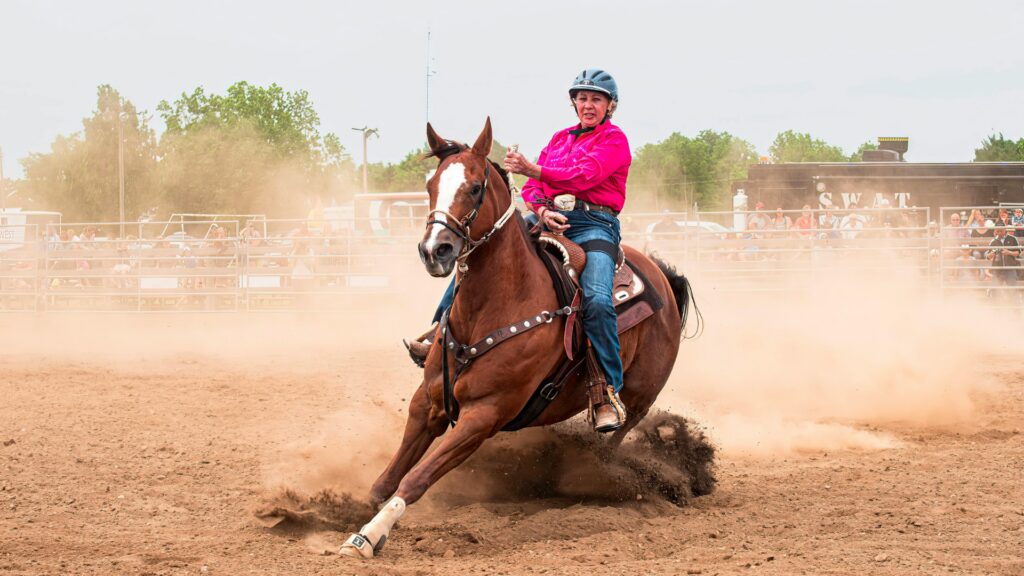
Do you choose your emotions—or do they choose you?
Do you have the power to influence your emotional state?
I know some of you are thinking, Nicole, I don’t choose my emotions. I just feel them.
And I get it. You may not consciously decide to feel anxious, guilty, scared, embarrassed, or sad. Those feelings show up. Your body and brain are waving a little red flag saying, Hey, coach! Stuff’s going on over here!
But what happens next is where you have some influence.
And there’s an important distinction here: taking responsibility for your emotions is not the same as being at fault for having them.
You don’t have to shame yourself for feeling nervous or frustrated. You do need to learn what to do with that emotion once it arrives, because nobody else can manage it for you.
Nervousness and excitement have more in common than you think
Picture yourself sitting at the end gate. Your heart is pounding, your stomach feels tight, and your body is READY.
Then your brain says, Oh my gosh. I’m going to blow it. I’m going to embarrass myself. This is going to go so poorly.
Your brain interprets all that physical activation as anxiety and danger.
Now imagine the same pounding heart and the same energized body, but this time you’re thinking, I’m excited. I can’t wait for this challenge. I’m ready to test our skills.
Same moment. Very different interpretation.
The story you tell yourself about what you’re experiencing can influence what happens next. That’s why learning to reframe your internal experience can be such a powerful mental skill.
A 3-step process for building emotional resilience
Here’s a process you can actually take into the saddle.
1. Start with awareness
Riders are usually really good at reading their horses. We notice whether they’re tense, distracted, worried, or listening, but we can become so focused on the horse that we forget to check in with ourselves.
Ask yourself: How am I feeling right now?
Notice your body, your thoughts, and your emotional state before trying to change anything. Are you helping the situation—or adding more tension to it?
2. Take a timeout
Pause and breathe.
Yes, breathing will change your life, and I’m going to preach it from the rooftops forever and ever.
Take a few deep breaths. Check in with what you’re thinking and feeling, and give yourself enough space to decide whether you need to change direction.
And before you tell me you don’t have time: there is always time to breathe. You’re literally doing it right now.
3. Choose what happens next
This is where one of my favorite tools comes in: curiosity.
Instead of thinking, Everyone thinks I look like a total beginner, ask:
- How could this go better?
- What can I learn here?
- What opportunity do I have right now?
- What is good about this situation?
Maybe your new thought becomes, This is challenging, but I can do hard things. Or, I don’t have to be perfect. I’m here and willing to learn.
You can even remind yourself: Part of what makes me a good rider is how I handle difficult situations.
You’re a good rider having a difficult ride
This is the reframe I REALLY want you to take with you.
Our brains love to turn I’m struggling and having a difficult ride into therefore, I’m not a good rider.
Nope.
You can be a good rider having a difficult ride.
Your horse can be tense. Your ride can get ranchy. You can make a mistake. Something can go completely sideways. None of those things automatically mean you’re a crappy rider.
Remind yourself: I’m okay. This is difficult. I have skills. I have resources. I can solve this.
That’s emotional resilience in action.
Practice emotional resilience on your next ride
The next time things don’t go according to plan, notice your emotional state before automatically reacting to it. Take a timeout, breathe, and decide what happens next.
And if things get a little ranchy? You gotta get a little punchy.
Get curious about what’s happening instead of immediately judging yourself. Look for the opportunity, choose thoughts that support the way you want to ride, and remember that one difficult moment doesn’t have to decide the rest of your ride.
Want more confidence when things don’t go as planned?
It’s easy to feel confident when your horse is perfect, your warm-up goes according to plan, and nothing unexpected happens.
Confidence gets tested when your heart starts pounding, your horse gets tense, your brain starts spinning—and you still need to ride.
That’s exactly why I created 5 Days to Confident Competitor. Over five days, you’ll start strengthening the mental skills that help you manage pressure, recover from difficult moments, and ride with more confidence when it counts.
Because the goal isn’t to never feel an uncomfortable emotion again.
It’s to stop letting one difficult moment decide the rest of your ride.
👉 Join 5 Days to Confident Competitor
Ride with confidence,
Nicole Burnett
Mental Coach & Founder, Resilient Reiner
Read Next
How to Be Consistent and Get Results as a Rider (Even With a Full-Time Job)
Why Do Affirmations + Positive Self-Talk Work on Instagram but Not in the Warm-Up
If pressure, overthinking, or show nerves have been getting in the way of your best rides, 5 Days to Confident Competitor is a simple place to start.
This five-day training helps you understand what happens in your brain and body when the pressure rises, so you can begin building tools to steady yourself, communicate more clearly with your horse, and ride with more confidence.
Start Building Show-Pen Confidence
I'm ready to stop show nerves →
Your horse feels what you bring into the saddle.
When pressure hits, your body, timing, focus, and confidence all affect the ride your horse gets.
Nicole Burnett is a mental performance coach for western riders who want their mindset to match their skill, their horse, and their goals.
Through practical mindset coaching and nervous system training, Nicole helps riders stay steady, communicate more clearly, and ride more effectively — whether they’re rebuilding confidence at home, sharpening their show-pen mindset, or preparing to compete on the national stage.
Work With Nicole
Explore ways to work with Nicole →
