Not Riding Your Horse Enough? Here’s What I Do When Life Gets Busy
9/17/26
Lately, I haven’t been riding as much as I want to.
And I’m annoyed about it.
Not because I’ve lost motivation. Not because I don’t care about my horses. Not because I suddenly decided my riding goals aren’t important to me.
I genuinely want to ride.
But right now, life is a lot.
My husband is out of town. I’m driving kids all over creation. I’m running businesses, working on a couple of app projects, trying to keep up with normal life, and meanwhile I keep looking outside thinking, I would really like to be riding my horses right now.
And honestly, there’s a little part of me wondering whether I somehow manifested this.
For years I’ve talked about understanding the reality of being a non-pro rider — the person who has serious riding goals but also has a job, kids, responsibilities, bills, appointments, errands, and approximately 47 other things competing for her attention.
Apparently the universe heard me and said, “Great. Let’s make sure you really understand.”
Message received.
But this busy season has also made me notice something I see riders do all the time:
We experience a capacity problem and immediately turn it into a motivation problem.
And then, if we’re not careful, we turn that into an identity problem too.
So right now, instead of trying to force myself into some ideal version of what my riding schedule “should” look like, these are the things I’m doing to keep a busy season from turning into guilt, frustration, or abandoning my riding goals altogether.
1. I ask whether I actually have a motivation problem
There’s a particular kind of advice that sounds good until you are living a very full life:
“If it matters enough, you’ll make time.”
Sometimes? Absolutely.
There are times when we’re procrastinating. There are times when we need to stop waiting until we feel motivated and go ride the dang horse.
But there are also times when you really do have more demands on your time than you have available capacity.
Wanting something badly enough does not magically eliminate school pickup.
It doesn’t cancel the work deadline.
It doesn’t make the sick kid healthy, the appointment disappear, the trailer load itself, or the weather cooperate.
And admitting that doesn’t mean you’re making excuses.
Sometimes the calendar really is the problem.
The first thing I’m trying to do right now is get honest about which problem I actually have.
Am I avoiding something?
Or do I genuinely have less available time and energy than usual?
Because those are two very different problems, and they need two very different solutions.
2. I stop turning “I haven’t ridden” into a judgment about myself
This is where things can get ugly fast.
A simple fact like:
“I haven’t ridden very much this week.”
can very quickly turn into:
I’m inconsistent.
I’m lazy.
I’m falling behind.
I’m not serious enough.
Other riders want this more than I do.
Maybe I’m never going to accomplish what I want.
Whoa.
We went from “Tuesday got away from me” to questioning our entire identity as a rider in about six seconds.
Those are not the same thing.
One bad week does not tell you who you are as a rider.
Neither does one chaotic month.
We have a tendency to judge ourselves based on the tiny slice of time we happen to be standing in.
If you haven’t ridden much in the last seven days, it can suddenly feel like you never ride.
If your horse had two weeks off, it can feel like all of your progress has disappeared.
If you missed the plan you made for yourself, it can feel like evidence that you’re simply “not consistent.”
Before I let myself go there, I’m trying to zoom out and ask:
What is actually true?
Am I genuinely disengaged from my goals?
Or am I in a season where my available capacity changed?
That distinction matters.
3. I let shorter rides count
This has been a big one for me.
I have absolutely had rides where I got off and mentally dismissed the whole thing because it didn’t look like what I thought a “real” training session should look like.
Maybe it was short.
Maybe I rode bareback.
Maybe we mostly walked and jogged.
Maybe we didn’t accomplish anything particularly impressive.
So my brain filed it under:
Eh. That hardly counts.
Except… why?
I got my horse out.
I rode.
We worked on something.
We spent time together.
The horse got another positive experience under saddle.
Of course it counts.
When life gets busy, I’m trying to stop treating the ideal version of a ride as the only version worth doing.
Maybe today is a 15-minute ride.
Maybe you get on bareback in a halter.
Maybe you work on one specific thing and quit.
Maybe you do groundwork.
Maybe you go for a walk.
Maybe you take one horse on a trail ride and let that be the training session.
Not every ride has to be some grand, highly productive event worthy of a training montage.
Sometimes the best session is simply the one that fits.
And four imperfect 20-minute sessions can move you a lot farther forward than the mythical two-hour ride you keep waiting to have time for.
4. I change the plan instead of abandoning the goal
Your goal and your plan are not the same thing.
This is something I keep reminding myself.
Maybe your goal is to improve your horse’s conditioning.
Maybe you want to prepare for a show.
Maybe you want to become a more confident rider.
Maybe you’re trying to keep multiple horses progressing.
The plan you created is simply one method for getting there.
If the original plan was “ride five days a week for 45 minutes,” and your life changes, you are allowed to change the method without abandoning the goal.
Maybe you ride three days and do a longer trail ride on the weekend.
Maybe some weeks contain more groundwork.
Maybe one horse gets the priority for a few days.
Maybe you temporarily shorten sessions.
Maybe the week simply looks different than you intended.
That does not automatically mean the goal is gone.
The question I’m trying to ask is not:
“Am I following the plan perfectly?”
It’s:
“What can I do right now that still moves me toward what matters?”
5. I don’t try to “make up” every ride I missed
Another thing we riders love to do:
We have a week where life goes completely sideways.
Then Sunday night arrives and we announce:
“Okay. NEXT WEEK I am riding EVERY DAY.”
We build the comeback plan out of guilt.
Monday: ride three horses.
Tuesday: lesson.
Wednesday: haul out.
Thursday: ride three horses again.
Friday: trail ride.
Saturday: somehow also clean the entire barn, meal prep, be an attentive parent, run a business, and become a better person.
And then real life continues to be real life.
The giant redemption week falls apart.
Now we feel even worse.
I’m trying very hard not to do that.
Instead of asking:
“How do I make up everything I missed?”
I’m asking:
“What could I realistically repeat next week?”
That answer may not feel as exciting.
It is usually a lot more useful.
6. I look at what I actually did
This is one of the reasons I built Every Horse: Training Tracker in the first place.
Our brains are terrible historians, especially when guilt gets involved.
I can feel like I haven’t done anything with one of my horses.
Then I look back and realize:
Oh.
I rode him three times.
We hauled out once.
I did groundwork another day.
That’s actually a pretty decent week.
And sometimes the opposite happens.
I think I’ve been keeping everybody in work, and then I look at the history and realize one horse has quietly been getting pushed to the back burner for two weeks.
Neither situation needs drama.
I just want the truth.
What did I actually do?
Where are we actually at?
What do I want to do next?
That’s it.
Tracking gives me something concrete to work with instead of relying on whichever story my brain happens to be telling me that day.
And honestly, it has also helped me give more credit to the smaller sessions I used to mentally dismiss.
That little bareback ride?
It counts.
The 20-minute session?
It counts.
The trail ride?
It counts.
Seeing it in black and white helps me remember that keeping a horse in work does not have to look perfect to still be meaningful.
7. Sometimes I decide I’m simply not riding today
There is a surprising amount of relief in making an actual decision.
If today genuinely is not a riding day, I’m trying to call it.
“Today I’m driving kids. I’m working. I’m not riding.”
That feels very different from spending the entire day thinking:
Maybe I can squeeze it in.
I should be riding.
Maybe after this.
I’m running out of time.
Ugh, now it’s too late.
You can burn an enormous amount of mental energy feeling like you are failing to do something you never realistically had time to do in the first place.
A deliberate no is often much easier to live with than an endless failed maybe.
And I also think it matters to say this:
You are allowed to be annoyed about it.
You can love your kids and still be irritated that you spent the entire afternoon driving them around instead of riding.
You can be grateful for your business and still wish it required less of you this week.
You can understand why your horse got three days off and still be disappointed that you didn’t get to ride.
Emotional regulation does not mean pretending disappointment isn’t disappointing.
Sometimes the healthiest response is:
“This isn’t what I wanted this week. I’m frustrated. And this is where things are right now.”
You don’t need to create an identity crisis out of it.
Your riding goals need to survive real life
The more I think about it, the goal probably isn’t becoming the rider whose life never interferes with her riding.
I’m not sure that woman exists.
Especially for the non-pro rider.
There will be busy seasons.
There will be kids and jobs and injuries and weather and family obligations and horses that need unexpected things and weeks where nothing goes according to plan.
The real skill may be becoming the rider who knows how to keep going anyway.
Not perfectly.
Not according to the original schedule.
But without turning every interruption into evidence that she has failed.
You adjust.
You do what fits.
You keep the thread.
And when you have more capacity again, you pick it back up.
Because the goal isn’t perfection according to some arbitrary original plan.
The goal is learning how to return.
Your riding goals don’t need a perfect life.
They need to be sturdy enough to survive a real one.
Thanks for being here, friend,
Nicole
If pressure, overthinking, or show nerves have been getting in the way of your best rides, 5 Days to Confident Competitor is a simple place to start.
This five-day training helps you understand what happens in your brain and body when the pressure rises, so you can begin building tools to steady yourself, communicate more clearly with your horse, and ride with more confidence.
Start Building Show-Pen Confidence
I'm ready to stop show nerves →
Your horse feels what you bring into the saddle.
When pressure hits, your body, timing, focus, and confidence all affect the ride your horse gets.
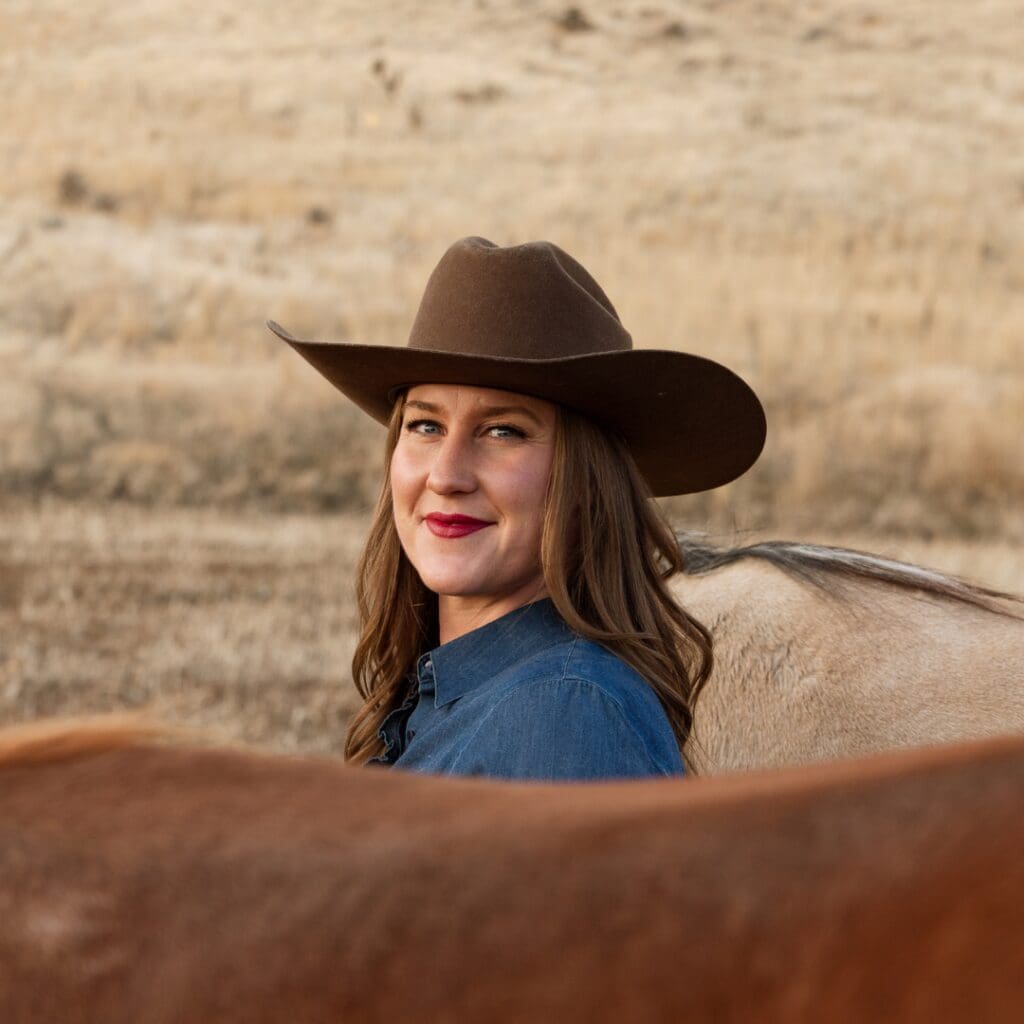
Nicole Burnett is a mental performance coach for western riders who want their mindset to match their skill, their horse, and their goals.
Through practical mindset coaching and nervous system training, Nicole helps riders stay steady, communicate more clearly, and ride more effectively — whether they’re rebuilding confidence at home, sharpening their show-pen mindset, or preparing to compete on the national stage.
Work With Nicole
Explore ways to work with Nicole →
